 +376 613 318
  office@andorragestoria.com
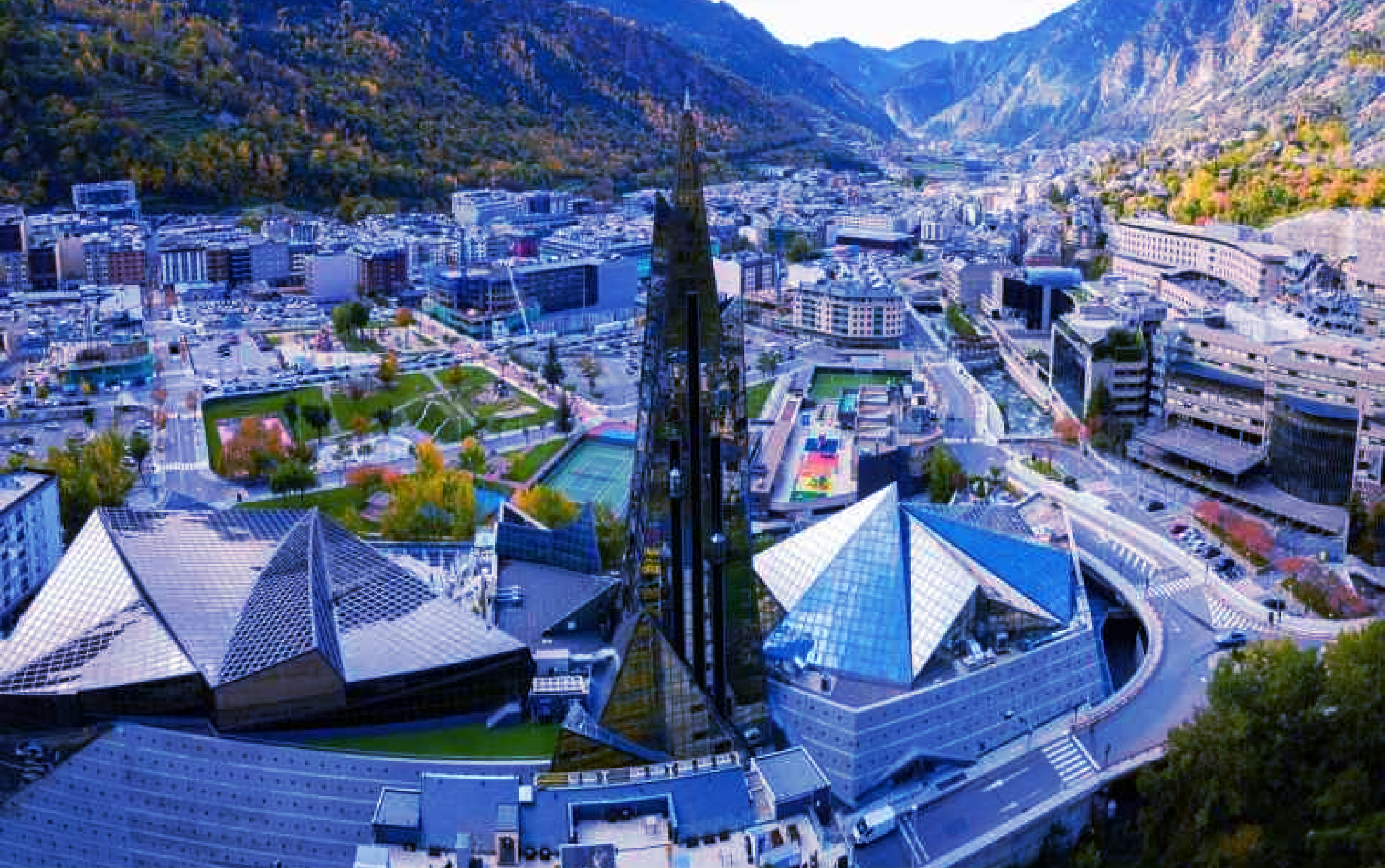
Andorra: When Success Becomes Its Own Worst Enemy
The Principality has spent three consecutive years breaking real estate records. Prices are soaring, mortgages have reached historic highs, and a new law has rewritten the rules for foreign investors. Understanding this market is no longer optional for anyone considering settling or investing in Andorra.
There is a paradox in the Andorran model that is becoming increasingly difficult to ignore. The same tax regime that has turned the Principality into one of Europe’s most attractive destinations for high-net-worth residents — top rates of 10% on personal and corporate income, no inheritance or wealth taxes, and a 4.5% indirect tax equivalent to VAT — is also the engine that has made access to housing a first-order structural problem.
Data from the Departament d’Estadística del Govern d’Andorra illustrates this with precision. In the second quarter of 2025, the average price per square meter for apartments reached €4,498, 15.6% higher than the same period a year earlier. By the end of 2025, the overall price index stood at €4,582 per square meter, representing a 47.2% increase since 2019. In the most sought-after segments, such as Escaldes-Engordany, prices range between €5,689 and €7,135 per square meter, while luxury developments comfortably exceed those thresholds. For comparative context, the average asking price per property on digital platforms surpassed €895,000 in 2025, marking an annual increase of nearly 34%.
The market, however, is not only rising in price; it is accelerating in volume and intensity. Throughout 2025, total real estate transactions grew by 35.3% compared to the previous year, while the number of properties transferred rose by 37.3%. In the first quarter alone, activity jumped nearly 71% year over year — partly a rebound effect following the foreign investment moratorium in force between September 2023 and February 2024. In any case, the data confirms that demand is real, sustained, and diverse, a trend corroborated by the mortgage market. For the first time since comparable records exist, Andorra surpassed 1,000 mortgages granted in a single year, reaching 1,064 operations in 2025 — a 38.4% increase over 2024 — for a total value approaching €832 million, double the previous year. The average residential mortgage reached €401,591.
A Supply That Cannot Keep Pace
Behind this escalation lies an equation that is difficult to resolve. Housing supply in Andorra is, by definition, inelastic. Not only is developable land scarce and subject to strict environmental protections, but projects currently under development take between 18 and 24 months to complete. Construction is also heavily concentrated in premium segments, which are the most profitable but the least necessary for the majority of residents. A January 2026 report from the Col·legi Professional d’Agents i Gestors Immobiliaris d’Andorra (AGIA) noted that supply remains “very limited in relation to real market demand.” Absent deep structural reforms, this picture is unlikely to change meaningfully over the next two to three years.
The other side of the story is demographic pressure. Andorra counted 89,058 inhabitants as of December 31, 2025, and 40,928 households by the end of the first quarter of 2026 — a 3.4% increase year over year. This rate of population growth, three to four times higher than that of surrounding developed countries, is driven largely by the same fiscal advantages that attract foreign residents. The logic is circular: favorable taxation draws people in, people demand housing, housing becomes scarce and more expensive, and rising costs threaten the sustainability of the very model that generated the growth.
In the rental market, official data from the Sistema d’Indicadors de Contractes d’Arrendament (SICAR) presented by the government in November 2025 reveals stark segmentation. The average price of new rental contracts signed in 2025 was €18.19 per square meter, with an average monthly rent of €1,338. Yet renewed contracts — a substantial share of the rental stock — average just €7.8 per square meter. The difference between a long-standing tenant and someone searching for housing today is not marginal; it is more than double in cost per square meter. Digital portals, reflecting asking prices, showed averages of €26 per square meter throughout 2025. Set against an average net monthly salary between €1,200 and €1,400, these figures help explain why many workers in the service and tourism sectors choose to live across the border and commute daily.
The Omnibus Law: A Paradigm Shift, Not a Marginal Adjustment
The government’s response arrived in March 2025 with the approval of Llei 5/2025, per al Creixement Sostenible i el Dret a l’Habitatge, known as the Omnibus Law, in force since April 18. The law effectively rewrites the conditions of access to Andorra’s real estate market for non-resident investors and merits careful reading before any decision is made.
Under the new rules, foreign investors may acquire a maximum of two apartments or a single detached house. The purchase of properties for tourist or vacation use is prohibited, as is real estate development for resale. New developments must allocate at least 50% of units to affordable housing. On the fiscal side, the foreign real estate investment tax rises to 6% for the first property and 10% for the second; surcharges of 10% apply to capital gains on sales within two years and 5% between two and five years; and the tax on vacant properties doubles to €100 per square meter annually. Starting in October 2025, the government may also require the temporary transfer of empty homes into the affordable rental pool, and existing tourist accommodations must be converted into primary residences between 2028 and 2030.
The underlying message is clear: Andorra is not closing the door to foreign capital, but it is raising the standard of what it considers valuable investment. Capital arriving solely to speculate on appreciation or generate short-term tourist income no longer finds the same conditions as before. By contrast, long-term projects with social impact — such as affordable rental housing, stable ownership structures, and real economic activity — benefit from significant incentives, including a 90% reduction in the investment tax for properties dedicated to affordable rental for ten years. Tax collection from this levy reached €7.39 million in the first half of 2025, 80% of the annual budget target, underscoring the intensity of transactional activity just before the new regulation took effect.
What to Expect in the Coming Years
Consensus among analysts and market operators points to a moderation in price growth between 2026 and 2028, at around 4% annually. No sharp correction is anticipated unless triggered by an external shock of magnitude, such as a eurozone recession or a severe tightening of European interest rates. The fundamentals remain strong: full employment, rising wages, active international demand, and a pipeline of projects that will begin delivering new units from 2027 onward — though largely in higher-priced segments.
The critical variable is the speed at which the Omnibus Law’s measures are implemented. The mandatory conversion of tourist accommodations will not occur until 2028–2030; the impact of forced transfers of vacant properties into the rental pool will be gradual and partial; and meaningful urban planning reforms to expand buildable land remain absent from the agenda. In this context, anyone expecting the Andorran market to self-correct or prices to fall through inertia is likely to be disappointed.
Why Understanding This Market Matters
For investors or prospective residents viewing Andorra as a fiscal or wealth-planning destination, the current moment demands a more sophisticated reading than in previous years. The Principality’s structural advantages remain intact: legal certainty, political stability, a quality of life difficult to replicate at this level of taxation in Europe, and a GDP per capita among the highest on the continent. But access to the property market now has more layers than it did over the past decade, and poorly informed decisions about buyer tax status, acquisition limits, and ownership structures can prove costly.
In Andorra in 2026, the difference between a smooth transaction and a problematic one lies not only in price per square meter or parish selection. Increasingly, it lies in precise knowledge of the current regulatory framework, the ability to anticipate its evolution, and the right advisory structure to design an investment or relocation properly. Andorra remains a genuine opportunity — but, like all worthwhile opportunities, it demands careful judgment.
